
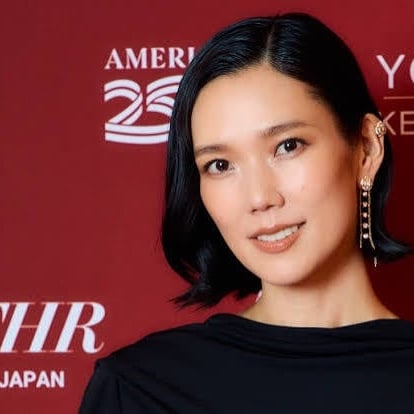
The model-turned-actress went from New York castings to Cannes. Now she's the third Japanese Trailblazer honoree, at a gala that doubled as a toast to Japan-US film ties.
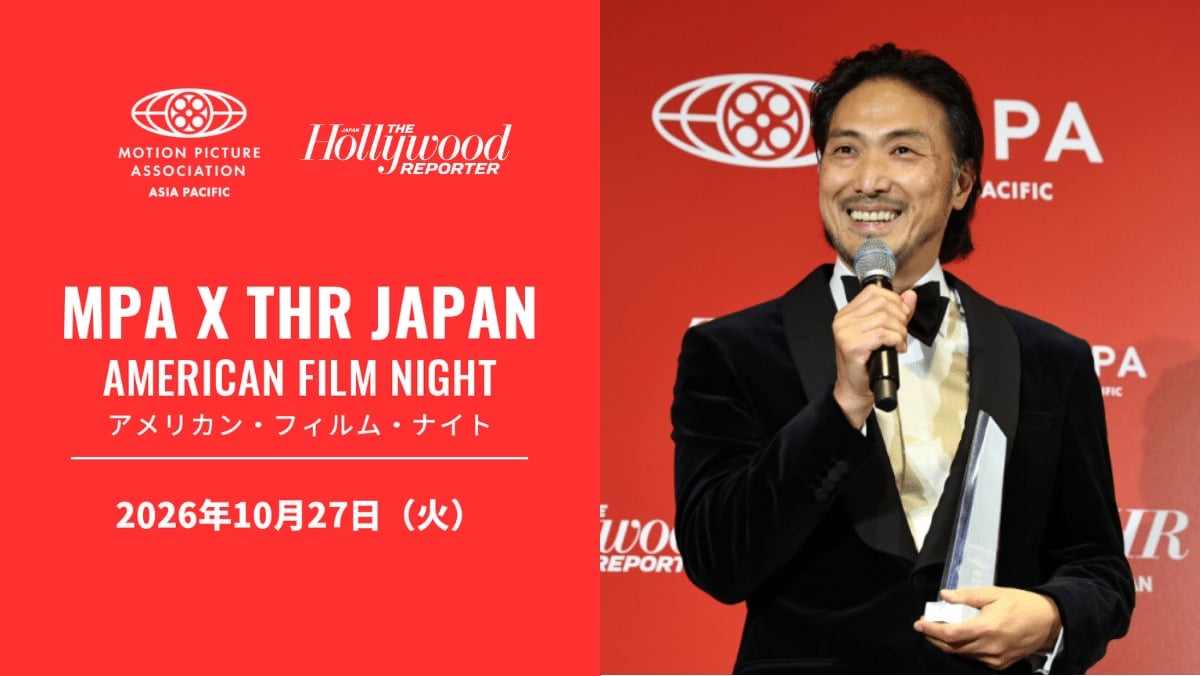
Tao Okamoto never planned to be an actor, and on Tuesday night she stood in a Tokyo ballroom holding a Trailblazer Award for being a very good one. The Hollywood Reporter honoured the actress at American Film Night, a black-tie gala at the Tokyo American Club put on by THR Japan and the Motion Picture Association during the Tokyo International Film Festival.
Okamoto, in an elegant black dress, accepted the prize from MPA APAC president and managing director Urmila Venugopalan and THR Japan Chairman Tsukasa Shiga. She is the third Japanese recipient, following Shōgun stars Takehiro Hira and Tadanobu Asano. The award goes to artists whose work illuminates stories and characters traditionally marginalized in Hollywood.
From New York model to Wolverine
Her own account of how it started is disarmingly short on strategy. “My acting career began with the Hollywood film The Wolverine, released in 2013,” she said in her speech. “Until then, I had been working as a model in New York. I had never imagined becoming an actor, so it was a big, unexpected gift.”
The gift kept coming. Okamoto went on to appear in Hannibal and The Man in the High Castle, building a résumé on American productions. But she told the room she had always hoped audiences at home would one day know her as an actor too.
In 2023 she acted on that hope and moved her base from the US back to Japan, where she started working in earnest. That year, she said, she met director Ryusuke Hamaguchi.
A Cannes win with a long route home
Hamaguchi’s All of a Sudden turned out to be the pivot. Okamoto won the Cannes Film Festival’s best actress award this year for her performance in it. In her words, the film made it feel “as if my journey, which began in America, had finally connected with my roots in Japan.”
The film is a co-production with France, Germany and Belgium, which made it her first European project. She credited that spread of contributors for its reception. “[The movie] carries the hopes of people from many countries,” she said. “I believe that is why it was honored at Cannes.”
She closed on a note that suited the evening. “People meeting across countries and cultures, and new forms of expression being born — that is one of the great joys of cinema,” she said. “I will keep treasuring these encounters, and I hope to work on films that connect Japan and the world.”
A room built for diplomacy
The setting made her story land harder. American Film Night is as much a networking event as a party, and the guest list showed it: top Japanese film executives, senior government ministers and local filmmakers mixing with visiting Hollywood powerbrokers. Japan’s Minister of Justice Takashi Yamashita and State Minister for Foreign Affairs Iwao Horii were there, along with Aaron D. Snipe, Deputy Chief of Mission at the U.S. Embassy Tokyo.
The evening opened with a message from Prime Minister Sanae Takaichi, who praised the cultural and political relationship between Japan and the US. References to America’s 250th anniversary ran through the night. “The close partnership between Japan and the United States in the film and media industry not only supports cultural exchange between our two countries,” Takaichi said. “It is also a major driving force of the global entertainment economy.”
She singled out Okamoto by name, congratulating her for “opening new paths around the world with her brilliant talent and passion.” Takaichi added: “The courage of pioneers like Ms Okamoto gives great hope to the next generation of creators.”
On the business side, the industry turned out in force. Hollywood was represented by AGBO partner Christopher Brearton, Amazon MGM Studios Japan head Buddy Marini, NBCUniversal Entertainment Japan president and CEO Shoji Doyama, Disney Japan’s Gaku Narita and Netflix’s Debra Richards. Stephen Jenner, the MPA’s vice president for Asia-Pacific and one of the event’s chief organizers, was there too. Toei’s Fumio Yoshimura, JCOM’s Yoichi Iwaki and U-NEXT’s Toshihiko Honda represented Japanese industry leaders.
The creative guests ran across generations. Tamiyo Kusakari of Shall We Dance?, Masaya Kato, Ayumi Ito and Sara Klimoska, star of Tokyo competition entry Sister Brother Manhole Cover, all attended. So did that film’s director, Milcho Manchevski, who won Venice’s Golden Lion for his 1994 debut Before the Rain. Also present were Departures director Yojiro Takita, Shōgun producer Eriko Miyagawa and Tokyo Vice executive producer Alex Boden. The festival’s leadership came as well: Festival Director Takeo Hisamatsu, TIFFCOM CEO Yasushi Shiina and TIFFCOM Managing Director Kaori Ikeda.
Okamoto’s route is a useful map of how that partnership works in practice. An American hit film found her in New York. A European co-production brought her home to Japan. Cannes then recognised the result. Fittingly, the room that honoured her was full of people who finance, distribute and shoot films on both sides of the Pacific.


