
Courtesy: Netflix
The film follows three gay men living in three different periods: 1932, 1937, and 2017. At first, their stories seem completely separate, but as the film unfolds, their lives connect through love, identity, and secrets from the past.
First, there’s Carlos, played by Milo Quifes, a young man in 1932 who wants to join an exclusive social club. The catch? Members vote on whether he gets accepted, and a black ball means rejection. It sounds like a small detail, but it introduces one of the film’s biggest themes: what happens when the world decides you don’t belong?
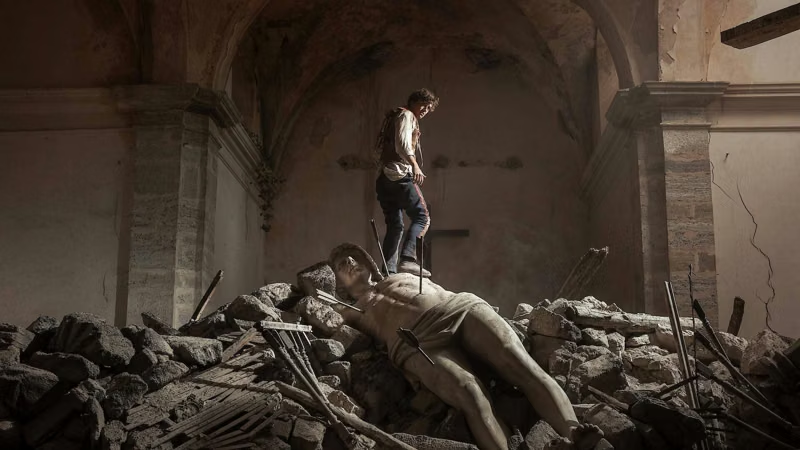
Then we meet Sebastián, played by musician Guitarricadelafuente, in 1937, during the Spanish Civil War. He’s serving in the Nationalist army when he becomes connected to Rafael, a Republican prisoner played by Miguel Bernardeau. They’re on opposite sides of the conflict, making their connection even more complicated.
Finally, we jump to 2017, where Alberto, played by Carlos González, inherits something from his estranged maternal grandfather. What starts as a family matter leads him to discover parts of his past he never knew about, bringing the three timelines together.

Courtesy: Netflix
So, What Does the Black Ball Mean?
The title translates to The Black Ball, and it’s more than just a reference to Carlos’s story. It represents rejection and the feeling of being excluded for not fitting into society’s expectations. Even though these men live decades apart, they all face questions about who they are, whom they can love, and how freely they can live their lives.
The film also takes inspiration from an unfinished work of the same name by Federico García Lorca, one of Spain’s most important writers. That connection adds another layer to the story, bringing together Spanish history, queer identity, and the experiences that often go unspoken.
Courtesy: Netflix
The Cast Is Another Reason to Pay Attention
Guitarricadelafuente makes his feature-film acting debut, joining a cast that includes Miguel Bernardeau, Carlos González, Milo Quifes, Lola Dueñas, Penélope Cruz, and Glenn Close. Behind the camera are Javier Calvo and Javier Ambrossi, better known as Los Javis, the duo behind Veneno and La Mesías.
If you’ve seen their previous work, you know they’re interested in characters who don’t fit neatly into society’s expectations. Here, they explore that idea across almost a century of history, showing how the past can continue to shape people’s lives long after the moment itself has passed.
Ultimately, La Bola Negra is part historical drama, part family mystery, and part story about love and identity. The interesting part is watching how three seemingly unrelated lives connect, and discovering what those connections reveal about the characters and the world they inherited.