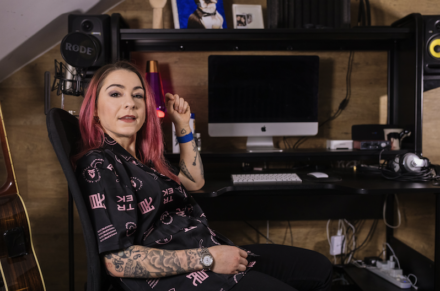
Vulkan magazine has previously described what being a Vulkan is. One who embodies an avant-garde, bold, and unapologetically authentic approach to modern culture, fashion, and art. If we were to extend what truly created a Vulkan, we can easily define it as one who is also bold and unapologetically authentic to oneself. Introducing Mickey Tableman, a man who cannot be defined by one tagline alone, but who is opening himself to the world in a variety of outlets, from music to podcasts to books and live performances.
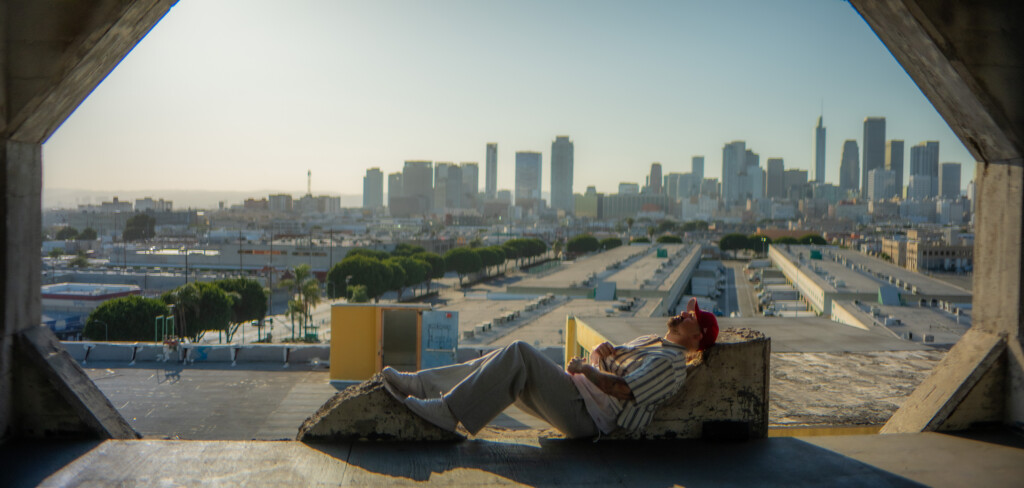
For Mikey Tableman, his latest project comes in the form of music via My Manic Maze best described as more than a collection of songs but rather an intimate exploration of the mind, told through spoken word, music, poetry, cinematic visuals, and live performance. Inspired by his own experiences with addiction, trauma, burnout, recovery, and the complexities of navigating his mental health, Mikey created the multimedia project as a way to tell his story without confining it to a single format. The result is an experience that embraces the chaos, vulnerability, setbacks, and growth that come with trying to better understand yourself.
At the heart of My Manic Maze is a message that extends far beyond Tableman’s own journey: you never know what someone is carrying behind the version of themselves they show the world. Through the project, as well as his Conversations with the Boys series, Tableman is creating space for honest conversations about mental health, masculinity, vulnerability, addiction, self-worth, and the pressure to appear as though everything is under control. Ahead, Tableman opens up about finding his creative voice, redefining what healing means to him, and why he hopes his work ultimately leaves audiences feeling a little less alone.
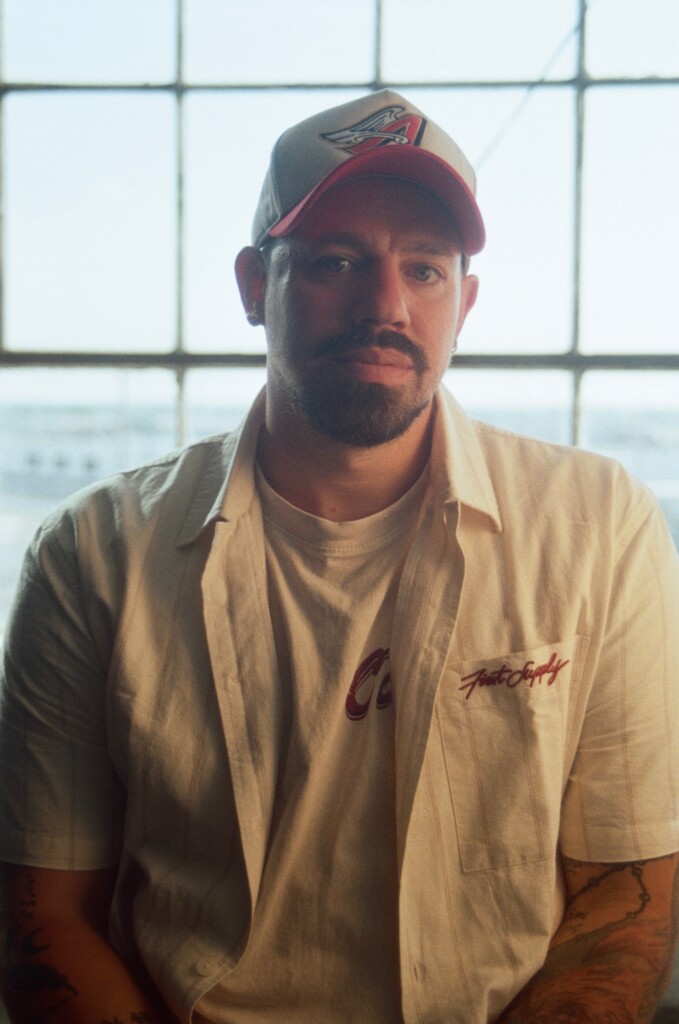
Vulkan: My Manic Maze is being described as much more than a traditional album. What made you create My Manic Maze as a multimedia project rather than as an EP with music alone?
My ADHD deserves an executive producer credit on this project because it simply refused to let me pick one medium and stay there. The truth is, every part of the story wanted to be told differently. Some moments sounded like music. Some belonged in poetry. Some needed the intimacy of a book, and others only made sense standing on stage in front of an audience. Rather than forcing everything into an EP, I followed the story wherever it wanted to go. The result became My Manic Maze not just an album, but an experience people can read, listen to, watch, and hopefully see pieces of themselves inside of.
Vulkan: You’ve chosen spoken word as one of your primary creative languages rather than traditional songwriting. What does spoken word allow you to express that music by itself sometimes can’t?
I’ve always viewed spoken word as a cousin of music rather than something separate from it. Rhythm, cadence, pacing, emotion, tension and release, all of those things still exist, they just aren’t always confined to a melody or traditional song structure. I listen to all types of music, but when I was writing this album I was listening to artists like Eminem, Russ, NF, guys like Ren, artists who understood that storytelling could be just as important as melody. Spoken word gives me the freedom to tell stories without having to fit them neatly into a verse, chorus, bridge, or sixteen bars. Sometimes a thought needs an extra thirty seconds to breathe. Sometimes it needs to speed up, unravel, interrupt itself, or sit in silence for a moment. I don’t really consider myself a rapper because I don’t sit down thinking in bars or counting measures. I just kind of follow the emotion wherever it wants to go. As someone whose mind has often felt chaotic and nonlinear, spoken word gives me permission to create in a way that feels honest to how I actually think and experience the world. I’m not writing to a beat as much as I’m writing to a feeling. For me, spoken word isn’t the absence of music. It’s just music with fewer walls around it.
Vulkan: The title My Manic Maze immediately sparks curiosity. How did you come up with the title?
My Manic Maze came from the feeling of spending years trying to navigate my own mind without a map. One of the first labels I was ever given was a manic disorder diagnosis, and for a long time that word carried a lot of weight for me. It felt like I never knew when my mood would shift, when things would spiral, or when I’d suddenly find myself in a place I didn’t recognize. There were periods where I genuinely felt like I was running blind, trying to survive these manic phases and somehow find my way back out alive. The “maze” part came naturally because that’s exactly what it felt like, endless turns, dead ends, moments of hope followed by moments of feeling completely lost. The project opens with the line, “because of my manic disorder,” in Down the Rabbit Hole, and in many ways that line serves as the doorway into the entire journey. But over time I realized the maze wasn’t something to defeat as much as something to understand. My Manic Maze isn’t just about getting lost inside your mind. It’s about learning how to navigate it, and hopefully helping other people feel a little less alone while they’re navigating theirs.

Vulkan: This project is rooted in your own experiences with addiction, trauma, burnout, and recovery. Can you share one of the more important experiences you want audiences to fully understand or resonate with if they are going through personal challenges themselves?
I think the biggest thing I want people to understand is that suffering doesn’t always look the way we expect it to. There were periods of my life where, from the outside, everything looked great. I had a successful career, relationships, friends, opportunities, and all the things people associate with having it together. Meanwhile internally, I was struggling with anxiety, addiction, depression, burnout, and thoughts I didn’t know how to talk about. I spent a lot of years becoming really good at appearing okay. If there’s one thing I hope people take from this project, it’s that needing help isn’t failure and struggling doesn’t make you weak. Some of the strongest people I know are carrying things nobody around them would ever suspect. Recovery, at least for me, wasn’t a single breakthrough moment. It was a thousand small decisions to keep going, to ask for help, to be honest, and to stop trying to carry everything alone. If someone listens to this project and recognizes parts of themselves in it, I hope they walk away with the understanding that they’re not the only person who has felt that way and they don’t have to navigate it by themselves.
Vulkan: Your music videos and visuals are described as highly cinematic. Were there any films, directors, or visual artists that inspired the look and feel of My Manic Maze?
Not particularly, which I know is probably the least exciting answer for a creative interview. A lot of the visuals actually come from images and scenes that already exist in my head as I’m writing or getting lost in ideas. My brain tends to think cinematically. I’ll be writing a piece and simultaneously seeing colors, environments, camera movements, characters, or entire scenes play out alongside the words. The challenge has never been coming up with the images, it’s figuring out how to bring them into the real world. That’s where Ben Meredith, our Director of Creative Production at A Mind’s Pursuit and the director behind the My Manic Maze visual EP, and JP Betancur, our Director of Digital Storytelling and one of my closest friends, become such an important part of the process. I’ll show up with a collection of emotions, metaphors, and what probably sounds like the ramblings of a madman trying to explain the inside of his head, and somehow they not only understand it, but expand it into something bigger than I originally imagined. The cinematic quality people connect with is really the result of that collaboration. Ben and JP have this incredible ability to translate feelings into visuals and build worlds around ideas that previously only existed in my mind.
Vulkan: Mental health conversations have become more common, but many people still struggle in silence. What misconceptions do you hope this project helps break down?
I think one of the biggest misconceptions is that pain is always visible. Some of the people who are struggling the most are also the people smiling in photos, showing up to work, making people laugh, hitting milestones, and looking like they have everything together from the outside. I know because I was one of them. Another misconception is that healing is linear. That once you ask for help or decide to get better, everything suddenly starts moving in a straight line upward. My experience was much messier than that. Recovery had setbacks, relapses, victories, grief, growth, and moments where I felt like I was back at the beginning all over again. I also hope it challenges the idea that vulnerability and strength exist on opposite ends of the spectrum. Particularly for men, many of us grew up believing that our value came from how much we could carry without asking for help. In reality, some of the strongest moments of my life came from finally admitting I couldn’t carry it alone anymore. More than anything, I hope the project reminds people that struggling isn’t abnormal. Being human is hard sometimes. The conversations we’re most afraid to have are often the ones that remind us we’re not nearly as alone as we think we are.
Vulkan: You’re asking audiences not just to listen, but to experience the project through music, poetry, visuals, and live performances. What do you hope someone feels when they leave one of these events, such as your recent event in LA?
More than anything, I hope they leave feeling a little less alone. The entire reason My Manic Maze exists is because I spent so much of my life believing I was the only person having these thoughts, carrying these feelings, or fighting these battles. The reality is that so many of us are walking around with stories we’ve convinced ourselves nobody else could possibly understand. When people leave one of these experiences, whether it’s the music, the poetry, the visuals, or the conversations afterward, I hope they leave feeling seen. I hope they recognize pieces of themselves in the work and realize that maybe the things they’ve been hiding are far more human and far more shared than they ever realized. The goal was never for people to walk away saying, “That was a great performance.” Honestly, if that’s all they take from it, I probably missed the mark. I want them to walk away feeling something. Maybe it’s hope. Maybe it’s permission to have a conversation they’ve been avoiding. Maybe it’s a text message to a friend they haven’t checked on in a while. Maybe it’s finally asking for help themselves. If someone leaves feeling a little more understood, a little more connected, or a little less alone than when they arrived, then the project did exactly what it was supposed to do.
Vulkan: Healing is a recurring theme throughout the project, but you also emphasize that healing isn’t linear. How has your definition of healing changed over the years?
When I was younger, I thought healing meant arriving somewhere. I thought one day I’d wake up and the anxiety would be gone, the depression would be gone, the addiction would be behind me, and I’d finally be “fixed.” Over time I’ve realized healing is much less about becoming a different person and much more about developing a different relationship with the parts of yourself you’ve spent years fighting. There are still hard days. There are still moments where old thoughts, old fears, or old patterns show up at the door. The difference today is that they don’t get to move in and redecorate the house anymore. Healing, for me, stopped being about perfection and started becoming about awareness, compassion, and learning how to navigate myself a little better each time. Ironically, I think one of the biggest steps in my healing journey was accepting that healing itself isn’t linear. There are setbacks, detours, and moments where you feel like you’ve somehow ended up back at the beginning. But if you look closely, you’re usually standing in the same place with more tools, more perspective, and more support than you had the first time you were there. These days my definition of healing is a lot simpler: It’s not never getting lost again. It’s trusting yourself enough to know you’ll find your way back out.
Vulkan: Conversations with the Boys brings together athletes, actors, musicians, and business leaders. Who are some of your favorite guests to date, and who are some guests you hope to have in upcoming conversations? Any favorite conversations and topics to date?
One of the things I’ve loved most about Conversations with the Boys is realizing how universal so many of these struggles really are. Whether someone is an athlete, actor, musician, entrepreneur, or business leader, so many of us are wrestling with the same questions around identity, pressure, purpose, and self-worth. Some of my favorite conversations to date have centered around the relationship between achievement and value, particularly our conversation with Cris Hodges about how many men tie their worth to what they produce, earn, or provide. Another topic that continues to resonate is the idea of the masks we wear and what happens when we spend so much time performing that we lose sight of who we are underneath them.
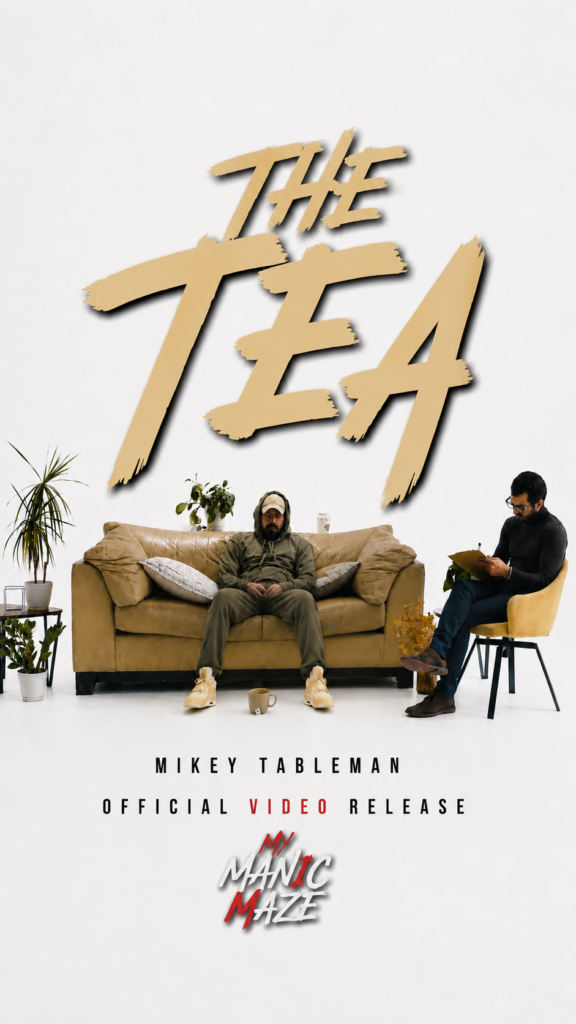
Dream guests? Mike Posner, Kevin Love, and Michael Phelps immediately come to mind for the incredible work they’ve done around mental health. I’d also love conversations with Terry Crews, Dax Shepard, and Rainn Wilson, people who have been willing to speak honestly about identity, purpose, vulnerability, and the human side of success. Bo Burnham or even Jason Kelce, who both bring a really interesting perspective on performance, pressure, and authenticity. The dream guest isn’t necessarily the most famous person in the room. It’s the person willing to say the thing everyone else is thinking but nobody wants to be the first to say out loud.
Vulkan: Men are often told to suppress emotion. What conversations do you hope viewers will begin having after experiencing your art?
The conversations about burnout, loneliness, anxiety, addiction, self-worth, grief, and the pressure of feeling like you’re supposed to have it all figured out. The conversations about what happens when the version of yourself you present to the world no longer matches how you’re actually doing inside. I think a lot of men were taught that strength meant silence, that vulnerability was weakness, or that asking for help somehow made you less capable. My experience has been the exact opposite. If my art gives someone permission to send the text, make the call, ask the question, or simply say, “I’m not doing as well as people think I am,” then it’s done its job. Some of the most important conversations are the ones we never have. Those are exactly the conversations I’m trying to create space for.
Vulkan: As discussed, you focus on keeping strong mental health. Can you tell us how much mental health is needed working in the entertainment industry that you didn’t know about yourself getting into the creative field so publicly?
Honestly, I’m still brand new to all of this and it’s been a whirlwind. One minute you’re creating something in private and the next you’re putting some of the most personal parts of yourself out into the world for strangers to interpret, critique, connect with, or ignore. I’ve definitely experienced imposter syndrome. I’ve worried about how people will react, whether the work is good enough, whether I’m qualified to be doing any of this, or whether people will see value in something that means so much to me personally. What I’m learning, and honestly still actively working on, is that I can’t attach my self-worth to other people’s reactions. If I allow views, streams, reviews, or validation to determine my value, I’m giving away far too much power over my own well-being. The goal for me has shifted from trying to create something everyone loves to creating something that is honest and meaningful. Everything beyond that is a bonus. I’m still learning how to navigate this industry publicly, but I think that’s part of the beauty of projects like My Manic Maze. People aren’t watching someone who has it all figured out. They’re watching someone figure it out in real time.
Vulkan: Social media has often been a topic of conversation with adults of all ages and how it can be detrimental to mental health. How do you balance a sense of work-life balance living in a very public space?]
Honestly, when I figure it out, I’ll let you know. It’s hard. Social media has become such a massive part of not only the entertainment industry but life in general. As a creative, especially an independent one, you’re not just making art anymore. You’re also a marketer, a content creator, a community manager, and somehow expected to be an algorithm expert on top of all of that. There can be a lot of pressure around followers, views, reach, engagement, and growth, especially when you’re trying to build something meaningful. If you’re not careful, it’s easy to start confusing attention with value or performance with self-worth. Honestly, there are days I find it exhausting and consuming. It can feel like a necessary evil at times. The same platforms that allow us to connect with people all over the world can also become places where comparison and validation start driving the conversation. I’m still learning how to navigate that balance in real time. I don’t think the goal is to avoid social media, I think it’s learning how to use it as a tool without allowing it to become your mirror. Because at the end of the day, followers are not friendships, reach is not fulfillment, and analytics are not self-worth.
Vulkan: Looking back at the person you were before this journey began, what would you tell a younger version of yourself today?
I think I’d tell my younger self to slow down and look around a little more. For a long time, I saw myself through the lens of my insecurities, my mistakes, and the stories my mind was telling me about who I was and who I wasn’t. The truth is, our brains can lie to us sometimes. They can convince us that we’re not enough, that we’re failing, or that we haven’t made an impact when the reality is often very different. I’ve learned that a lot of people see a version of me that I struggled to see in myself. They see someone who has helped them, encouraged them, inspired them, or simply made them feel less alone. So I’d tell that younger version of me to spend less time listening to his inner critic and more time looking through the eyes of the people who love him, believe in him, and have been impacted by his journey. And I’d probably tell him this too: you’re doing better than you think you are, and the things you believe will break you one day might actually become the things that allow you to help other people heal.
Vulkan: Finally, once audiences experience My Manic Maze, what do you hope they remember a year from now—not only about Mikey Tableman as an artist, but also about themselves?
A year from now, I hope people remember my name, if I’m being honest. Not because I want fame for fame’s sake, but because every additional person who knows my work creates another opportunity to tell stories that make people feel less alone. The bigger the platform, the bigger the conversations we get to have and the more people we get to reach. I want to continue building projects, books, albums, experiences, and communities that help people heal and remind them that they aren’t navigating life by themselves. If my name becomes associated with that mission, that’s something I’d be incredibly proud of. But more importantly, I hope people remember something about themselves. I hope they remember that they’re more resilient than they give themselves credit for. That their struggles don’t define them. That there is purpose in surviving the things they thought might break them. If people remember Mikey Tableman as someone who helped give a voice to the parts of themselves they didn’t know how to articulate, then I think I’ve done exactly what I set out to do.
By Ed Solorzano