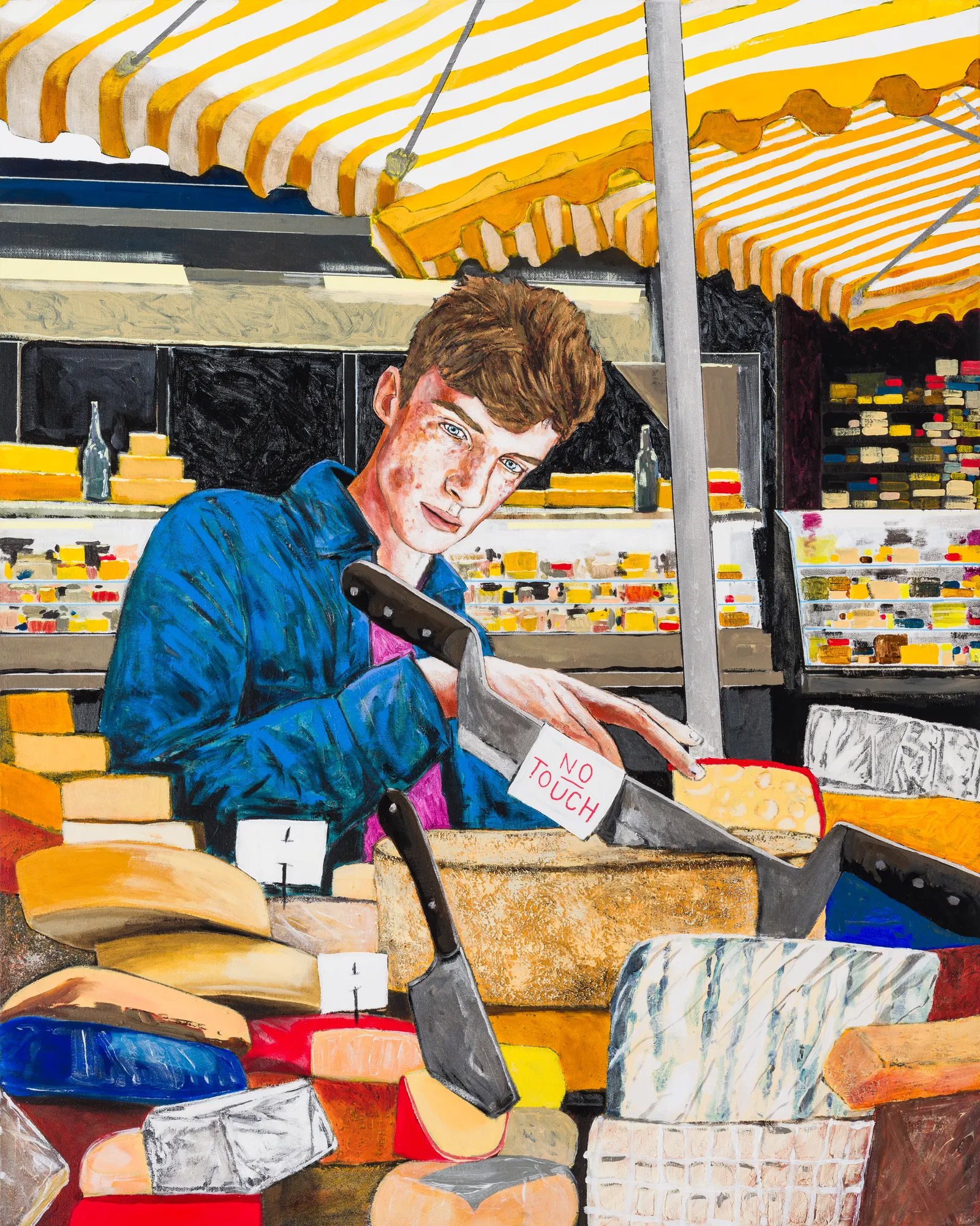
Few contemporary painters capture the tension between beauty, fantasy, and quiet unease as compellingly as Hernan Bas. Born in Miami in 1978, the Cuban-American artist has built an unmistakable visual language—one where adolescence, desire, mythology, and cultural references collide in dreamlike narratives that linger long after the first glance.
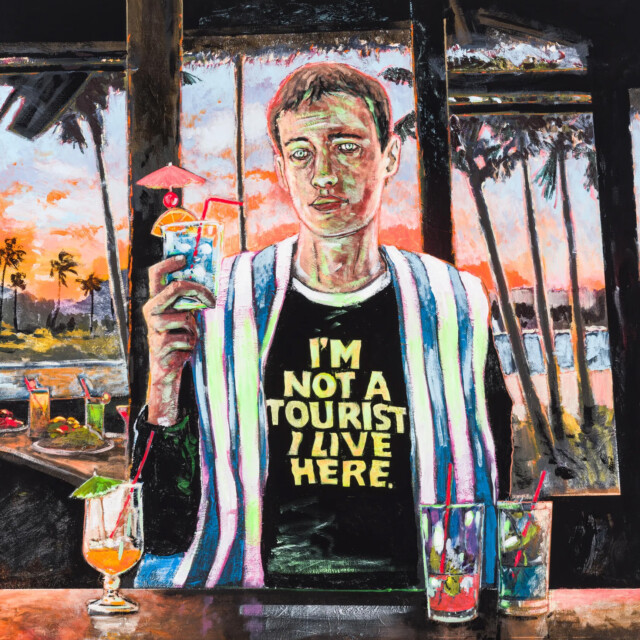
Bas has long been fascinated by outsiders. His paintings are populated by solitary young men, wandering through lush forests, faded mansions, museums, forgotten hotels, and imagined landscapes suspended somewhere between memory and fiction. They are romantics, collectors, adventurers, and misfits—characters who appear caught in moments of transformation, inviting viewers to invent the stories that surround them rather than simply observe them.
Working with richly layered surfaces and an unmistakable palette, Bas blends art history, literature, pop culture, occult symbolism, and queer identity into works that feel simultaneously timeless and contemporary. His paintings reward slow looking; every canvas reveals hidden references, subtle humor, and emotional ambiguity beneath its seductive beauty. Rather than offering straightforward narratives, Bas constructs psychological worlds where innocence and experience, fantasy and reality constantly overlap.
His recent body of work continues that exploration, shifting its attention toward modern rituals of travel and spectatorship while maintaining the artist’s signature interest in identity and performance. The familiar Bas protagonist remains present—not simply as an individual, but as a reflection of our own curiosity, vulnerability, and desire to belong in places that often feel just out of reach. citeturn0search0turn0search4
More than two decades into his career, Hernan Bas remains one of the most distinctive voices in contemporary figurative painting. His work refuses easy interpretation, balancing elegance with irony and intimacy with mystery. In a cultural landscape increasingly driven by immediacy, Bas reminds us that the most compelling images are often the ones that leave their stories unfinished—allowing imagination to become part of the artwork itself. citeturn0search6turn0search2