By Robin
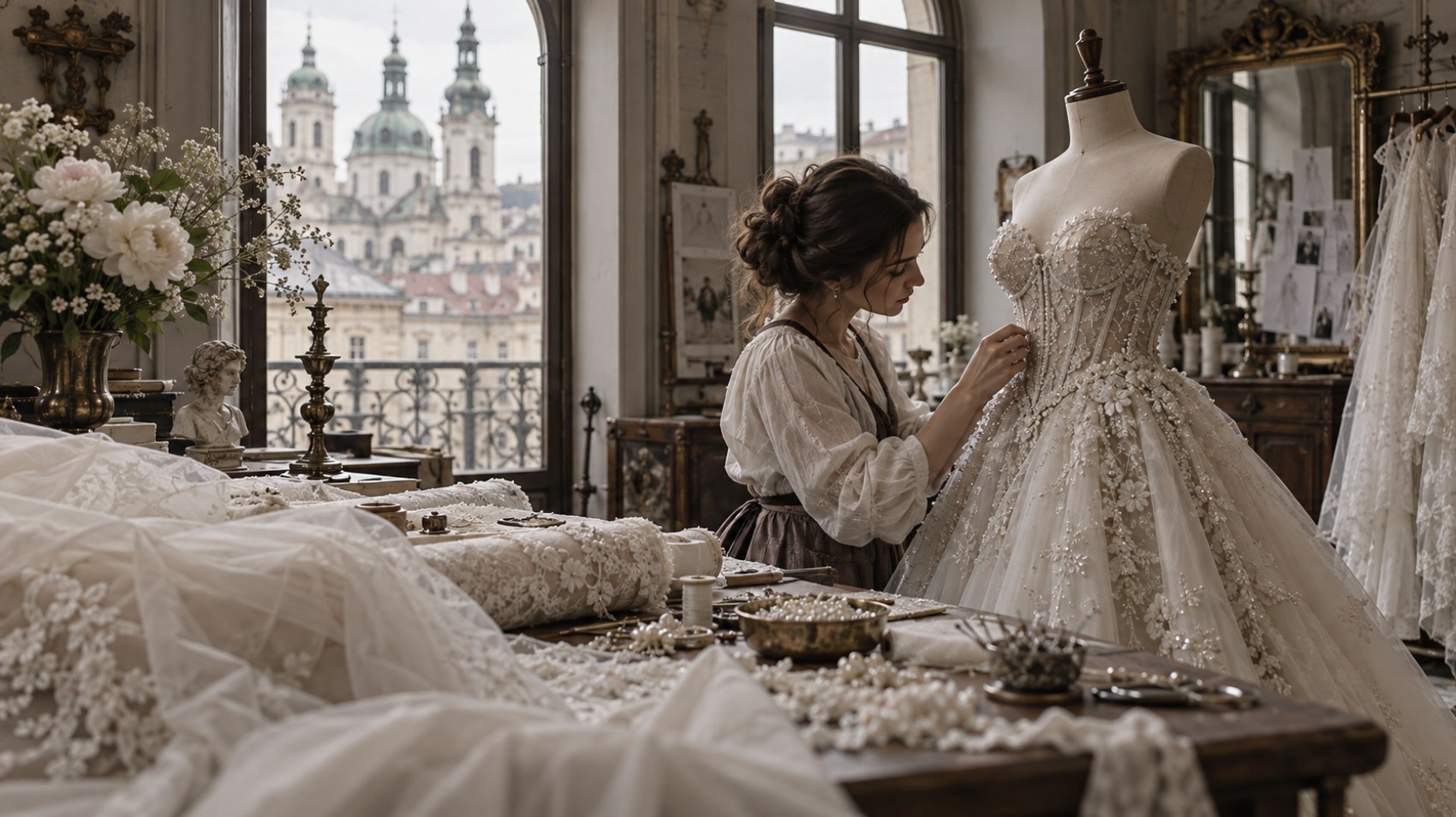
<p>Walk into a bridal boutique in Toronto, Milan, or Dallas and ask where the hand-beaded gown on the mannequin was sewn. The answer, more often than the label suggests, is Lviv or Chernivtsi. Ukraine has spent two decades becoming one of the world’s quiet bridal powerhouses, and the customer photographs every house collects, the real-brides galleries that fill their feeds, show who wears the work: brides in Kyiv registry offices, diaspora brides in Chicago church halls, and women in Dublin who only learned the dress was Ukrainian after they bought it. Scroll through Ukrainian real brides on any of those feeds and the pattern is the same: corsetry that holds, embroidery done by hand, and a fit that Western houses rarely offer below couture prices.</p>
<p>The war was supposed to end this. It did not. It moved factories, rerouted trucks through Romania, and pushed part of the workforce across the Polish border, and the gowns kept shipping.</p>
<h2>Three Cities, One Export</h2>
<p>Ukrainian bridal production clusters in three places. Lviv, in the west, is home to the two names international buyers know best. Chernivtsi, near the Romanian border, was the wedding-dress capital of the Soviet Union and still holds dozens of workshops that sew for private labels across Europe. Kyiv houses the design-led studios that show at bridal weeks in Barcelona and New York and sell under their own names.</p>
<p>What all three share is a labor model the West lost decades ago. A single gown can absorb 10 to 40 hours of hand-finishing, and the price at wholesale still lands below what a Spanish or American house would charge for machine-applied lace. Boutique owners noticed in the 2010s. Brides noticed when the dresses started showing up in their friends’ wedding photos.</p>
<h2>The Houses Boutiques Know by Name</h2>
<table>
<tr><th>House</th><th>Base</th><th>Founded</th><th>Reach and detail</th></tr>
<tr><td>Milla Nova</td><td>Lviv, with production added in Warsaw since 2022</td><td>2002, by sisters Zoryana and Iryna Senyshyn</td><td>Stocked in about 50 countries; employed roughly 600 people at the start of the invasion</td></tr>
<tr><td>WONÁ Concept</td><td>Lviv, second factory in Rzeszów, Poland</td><td>2009</td><td>More than 10,000 gowns a year for boutiques in 75 countries; showrooms on Fifth Avenue and in Beverly Hills; retail $5,000 to $12,000</td></tr>
<tr><td>Giovanna Alessandro</td><td>Chernivtsi</td><td>2009</td><td>About 350 dresses a month to 200-plus shops in 48 countries; offers ten sizes where many European houses offer five</td></tr>
</table>
<p>Set those numbers against the American average. The Knot’s annual survey puts the typical U.S. wedding-dress spend at about $2,000. A Ukrainian gown with hand-sewn beading can land in that bracket at retail, which explains why boutique buyers in mid-size cities, where a $6,000 dress rarely sells, went looking east.</p>
<h2>Why the Orders Kept Coming After February 2022</h2>
<p>In March 2022, Milla Nova’s Lviv workshop was sewing assault vests and medical scrubs on the same floors where it cut tulle, while still filling international orders. Giovanna Alessandro closed for one week, then reopened with 70 percent of its staff back and a new delivery route through Romania. WONÁ opened its Polish factory as insurance against blackouts. Buyers who braced for cancellations received tracking numbers, and that reliability, above any single collection, turned a supplier relationship into brand loyalty.</p>
<ul>
<li>Deadlines held: dresses shipped through Poland and Romania when Ukrainian airspace closed.</li>
<li>Sizing runs deeper: ten sizes as standard, which cuts alteration bills for the boutique.</li>
<li>Alterations handled by the maker, where a Western boutique typically charges $300 to $800.</li>
<li>Made-to-measure at ready-to-wear prices, because labor costs stayed low even as demand rose.</li>
<li>New capsules arrive every season, and customer feedback shapes them.</li>
</ul>
<p>What surprised me, reading the buyer interviews, was how little the war came up as a selling point. Nobody wanted charity. They wanted a gown delivered in twelve weeks that fit on the first try, and the Ukrainian houses delivered that while their staff commuted past air-raid shelters.</p>
<h2>The Bride Who Wears It Abroad</h2>
<p>The customer base shifted along with the factories. Canada counted more than 1.2 million people of Ukrainian descent in the 2021 census, and roughly 300,000 more Ukrainians arrived under the emergency travel program launched in 2022. Toronto, Edmonton, and Winnipeg bridal shops now see brides who order from home the way an Italian-Canadian bride orders from Milan: a video fitting with a Kyiv or Lviv atelier, a muslin sent by courier, a final gown that arrives with a hand-written note in Ukrainian.</p>
<p>Cross-border couples add another layer. A wedding that joins a Ukrainian bride and a Canadian or American groom often means two ceremonies, one civil and one in church, and the dress has to work in both. The public appetite for these pairings is real; the same fascination that drives features on celebrity couples who found love across borders shows up at the trunk show, where a bride from Odesa marrying in Mississauga asks for a gown that photographs well against both a Byzantine iconostasis and a Lake Ontario dock.</p>
<h2>What the Real-Brides Galleries Actually Show</h2>
<p>In bridal marketing, “real brides” means photographs of paying customers on their wedding day; campaign images live in a separate feed. Runway images sell a fantasy. Real-brides galleries sell proof, and Ukrainian houses were early to understand the difference. Milla Nova and WONÁ both run customer feeds where the photographs come from wedding days, in the light the bride actually stood in, on a body the sample size never anticipated. Buyers use them the way a restaurant uses its reviews: to see how the gown behaves after six hours, a dance floor, and a rainstorm.</p>
<p>Look closely at those feeds and the export story becomes a design story. Beading on many of the gowns follows Carpathian embroidery motifs, subtle enough that a bride in Dallas reads it as texture and a bride in Lviv reads it as home. Sleeves are detachable, because a Ukrainian church wedding wants shoulders covered and the reception wants them bare. Corsets are built to be worn for ten hours, since a Ukrainian wedding often runs into a second day.</p>
<p>Every one of those decisions was made in a workshop that has spent four years learning to sew through sirens. Lead times have held, several houses now run a second factory in Poland, and the customer feeds keep growing. If you want to know what the next decade of bridal looks like, stop reading runway reports and open a Lviv atelier’s customer feed on a Monday morning, when the weekend’s photographs arrive from three continents at once.</p>