WHAT'S HOT
A 24-Carat Pink Diamond Leads Christie’s Geneva Jewel Sale
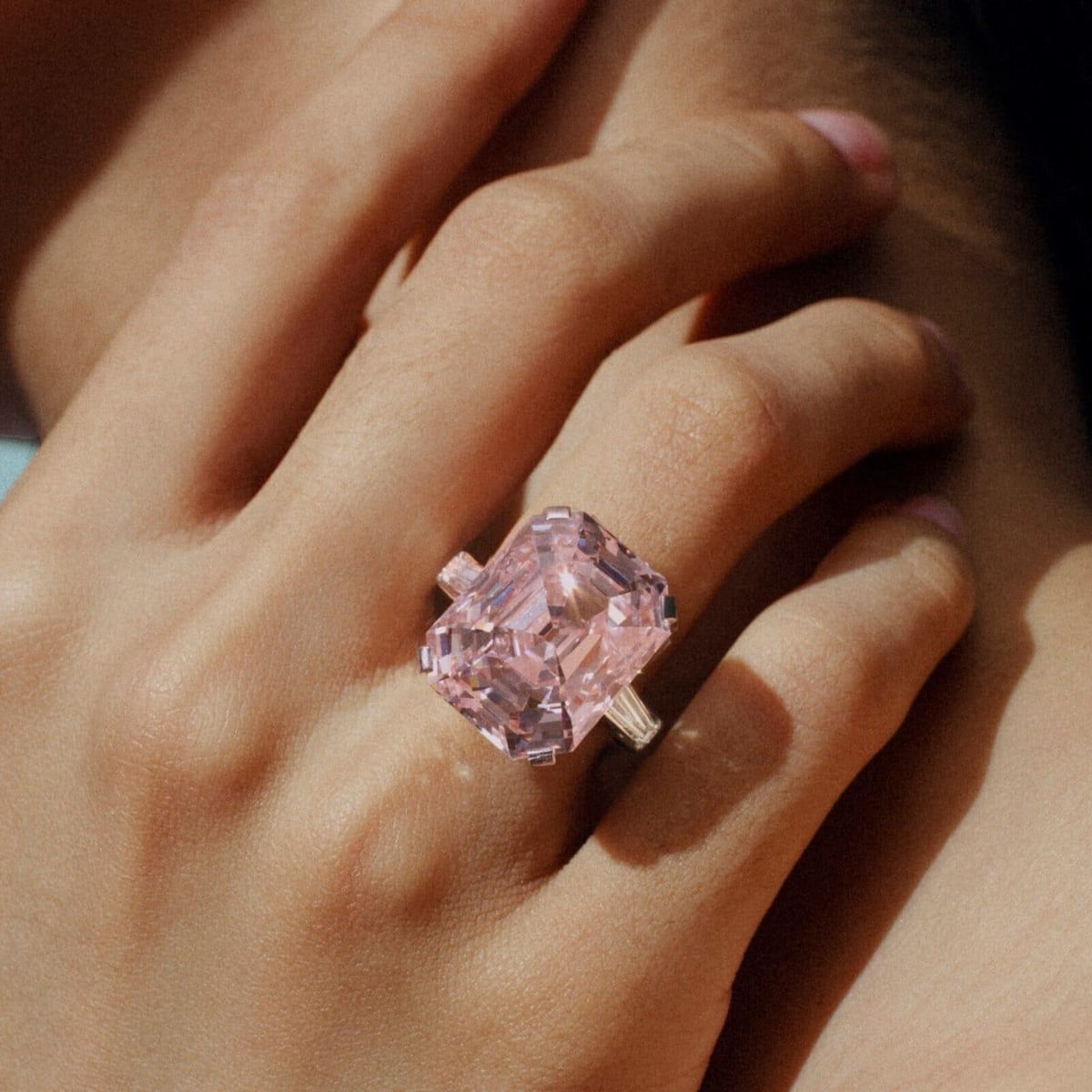
The Bulgari Pink, unseen on the market for 70 years, carries a CHF 10–15 million estimate. A Thurn and Taxis sapphire necklace and a 1936 Van Cleef ruby bracelet round out the room.
A pink diamond that has stayed in one European noble family for more than 70 years is about to meet the public, and Christie’s would like somewhere between CHF 10 million and CHF 15 million for the introduction. The stone is the Bulgari Pink, and it is the star of the Magnificent Jewels sale in Geneva on 10 November, part of Christie’s Autumn Luxury Week.
The pink that never left the family
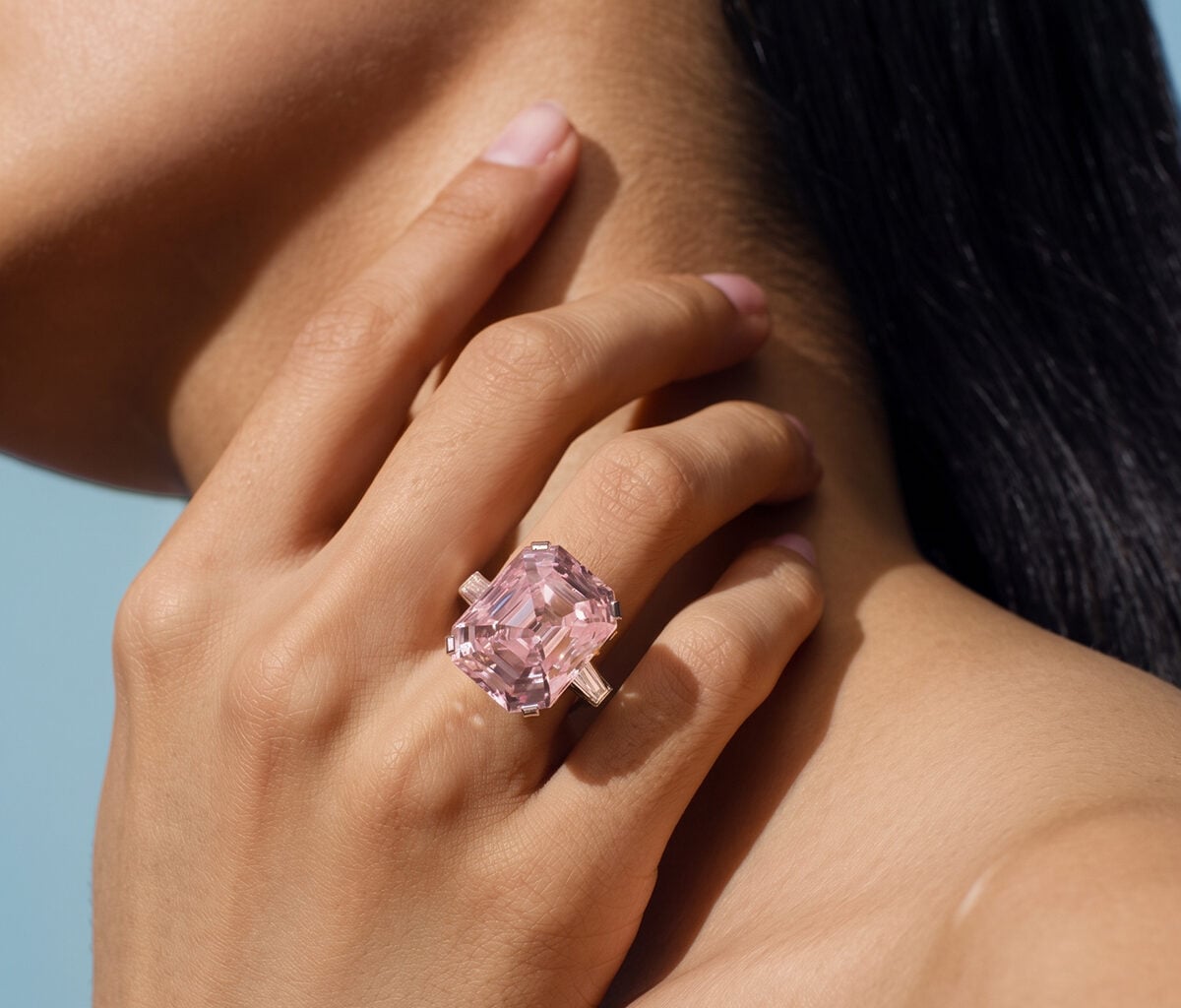
The specifics are as follows: 24.00 carats, Fancy Intense Pink, emerald-cut, mounted in a ring by Bulgari. It comes from the collection of what Christie’s calls a distinguished European noble family, and it has never before been offered for sale. The house describes it as preserved through generations of the same family, “a rare expression of beauty, history and enduring elegance.” Seven decades of private ownership is a long time for a stone this size to go unseen, which is much of the appeal.
A sapphire necklace with a royal address book
If the pink is the headline, the Castel Duino Mellerio sapphire necklace is the story you’d want to hear at dinner. The Mellerio dits Meller set, a necklace and a pair of earrings, pairs oval and cushion-shaped sapphires with old-cut diamonds, and the necklace’s pendants detach. It is dated to the 1870s and estimated at CHF 250,000 to 420,000.
Its paper trail reads like a European family tree. Louis Eugène Henri Marie, 9th Prince de Ligne (1854–1918), commissioned the jewels for the wedding of his daughter, Princess Marie Suzanne Marguerite Louise de Ligne (1885–1971), to Prince Alexander of Thurn and Taxis (1881–1937), the 1st Duke of Castel Duino. They passed to the couple’s son, Prince Don Raimondo of Thurn and Taxis (1907–1986), 2nd Duke of Castel Duino, who married Princess Eugénie of Greece and Denmark (1910–1989). Later they were inherited by Prince Carlo Alessandro of Thurn and Taxis, 3rd Duke of Castel Duino. The set last appeared at Sotheby’s Geneva on 11 May 2010, as lot 375.
The Royal Watcher blog, which saw nearly all of the Geneva lots in person, reports that it could not resist trying the necklace on. Few of us would have managed better.
Deco, Belle Époque and a very good bracelet
The supporting cast is heavy on the great French houses, and the best pieces come with a date and a signature.
The highest estimate after the pink belongs to a Van Cleef & Arpels Art Deco ruby and diamond bracelet, CHF 400,000 to 600,000. It is offered as property of a Lady of Title. Oval rubies sit among old, single and baguette-cut diamonds in platinum, circa 1936, signed Van Cleef et Arpels. By family record, it was bought directly from the maison in 1936 and has stayed in the family collection ever since. A clean line from the counter to the catalogue is a collector’s favourite kind of provenance.
Another Van Cleef & Arpels piece, a sapphire and diamond clip-brooch, carries an estimate of CHF 300,000 to 500,000. A separate Van Cleef Art Deco sapphire and diamond bracelet is estimated at CHF 80,000 to 100,000.
Elsewhere in the sale:
A diamond suite of necklace, bracelet and earrings, with round, marquise and pear brilliant-cut stones from 5.19 down to 0.39 carats plus baguettes, set in platinum. The necklace comes apart into three sections. Estimate: CHF 380,000 to 650,000.
A Cartier Belle Époque diamond necklace from the 1910s, with old and single-cut diamonds in platinum and a detachable pendant, signed Cartier. Estimate: CHF 130,000 to 200,000.
A Cartier Art Deco emerald and diamond flower brooch, estimated at CHF 100,000 to 150,000.
A pair of Chaumet Art Deco diamond bracelets from the 1920s, with old and rose-cut diamonds in platinum bearing French marks. They can be worn together as a choker. They are unsigned but carry the maker’s mark of Joseph Chaumet. Estimate: CHF 120,000 to 180,000.
Detachable parts turn up again and again in this sale. A necklace that becomes a pendant, a bracelet pair that becomes a choker: the jewellers of the 1910s and 1920s were designing for several outfits at once, and the lots reflect it.
The range of estimates is wide, from five figures to eight. At the bottom end sit pieces from the 1920s and 1930s that can still be worn. At the top sits a single pink stone that will be seen for the first time as it changes hands.