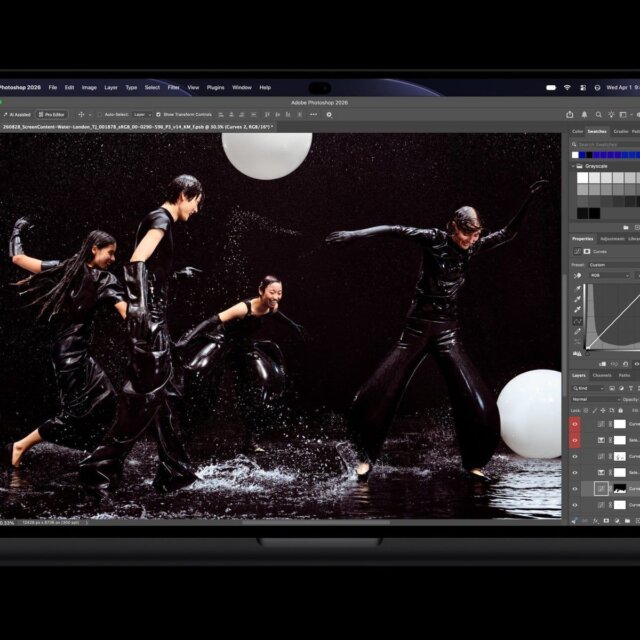
Apple's new MacBook Pro adds a touchscreen, a tandem OLED panel and M5 chips, from $2,899. For people who make things for a living, the question is whether it earns that price.
For years Apple kept its laptops and its tablets in separate rooms, and the 2026 MacBook Pro opens the door between them. Touch has arrived on the Mac. It comes with a new tandem OLED display, M5 Pro and M5 Max chips and a body that weighs less than before. Prices start at $2,899.
That is a serious sum for a laptop, so the useful question is who it is for. Apple’s answer is photographers, designers, filmmakers, architects and anyone else whose income depends on how pixels look. Here is how the machine holds up against that audience.
The screen is the story
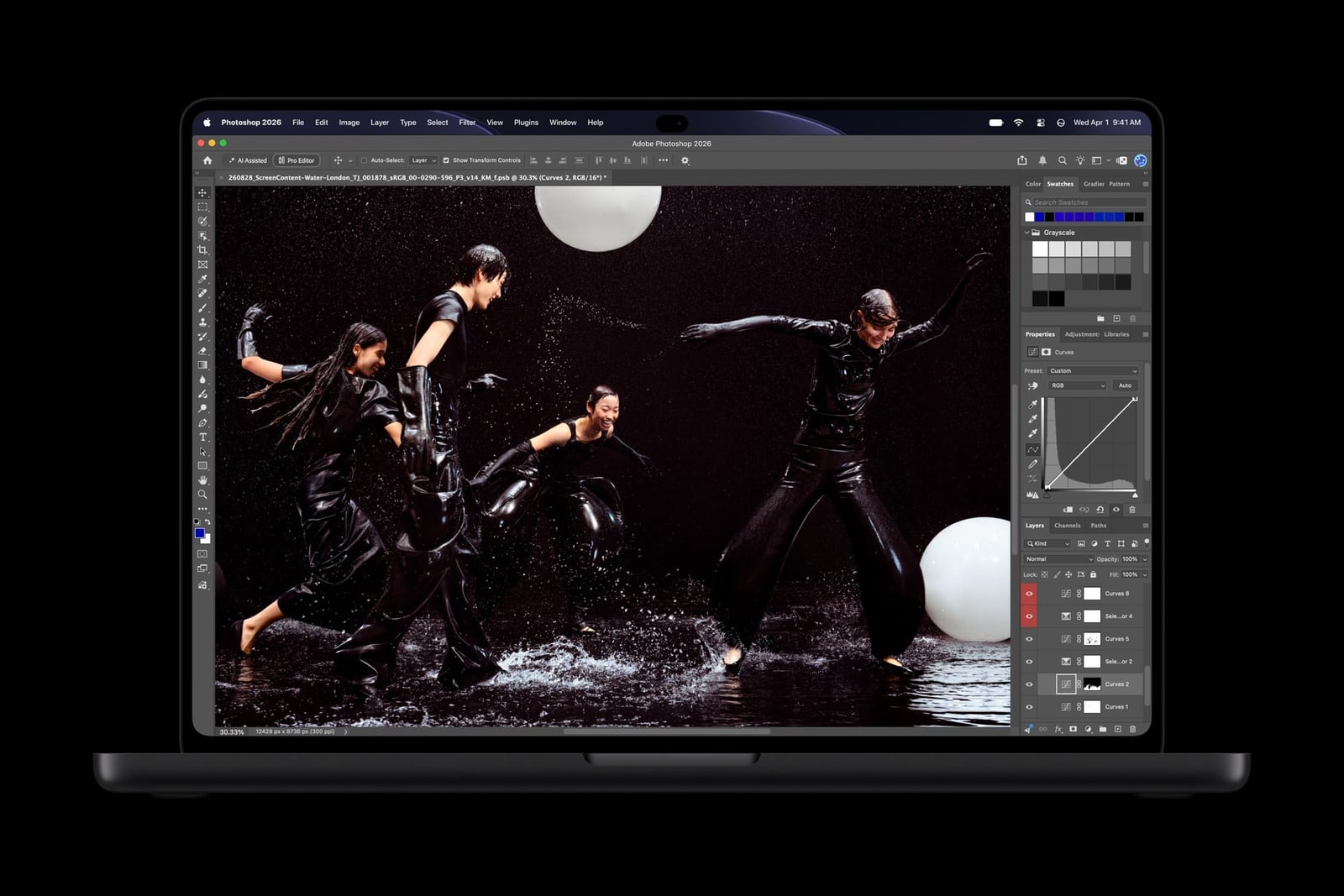
Apple calls the panel PROLED XDR. It stacks two self-illuminating pixel layers, the tandem OLED approach, which Apple says gives deeper blacks and sharper contrast. Its figures are 2,000 nits of peak brightness in both HDR and SDR, and a contrast ratio of 10,000,000:1. The refresh rate flexes between 10Hz and 120Hz, which keeps motion smooth and saves battery.
Brightness impresses in a showroom. Colour is what matters on a working day. The display covers P3 and Adobe RGB, with more than 80 percent of Rec. 2020. That suits a photographer proofing for print, a designer whose work ends up on screens and on paper, and a colourist grading HDR footage. Factory calibration and professional reference modes are included. A nano-texture option cuts reflections for anyone who works in a bright studio or outdoors.
Touch, with a hinge to match
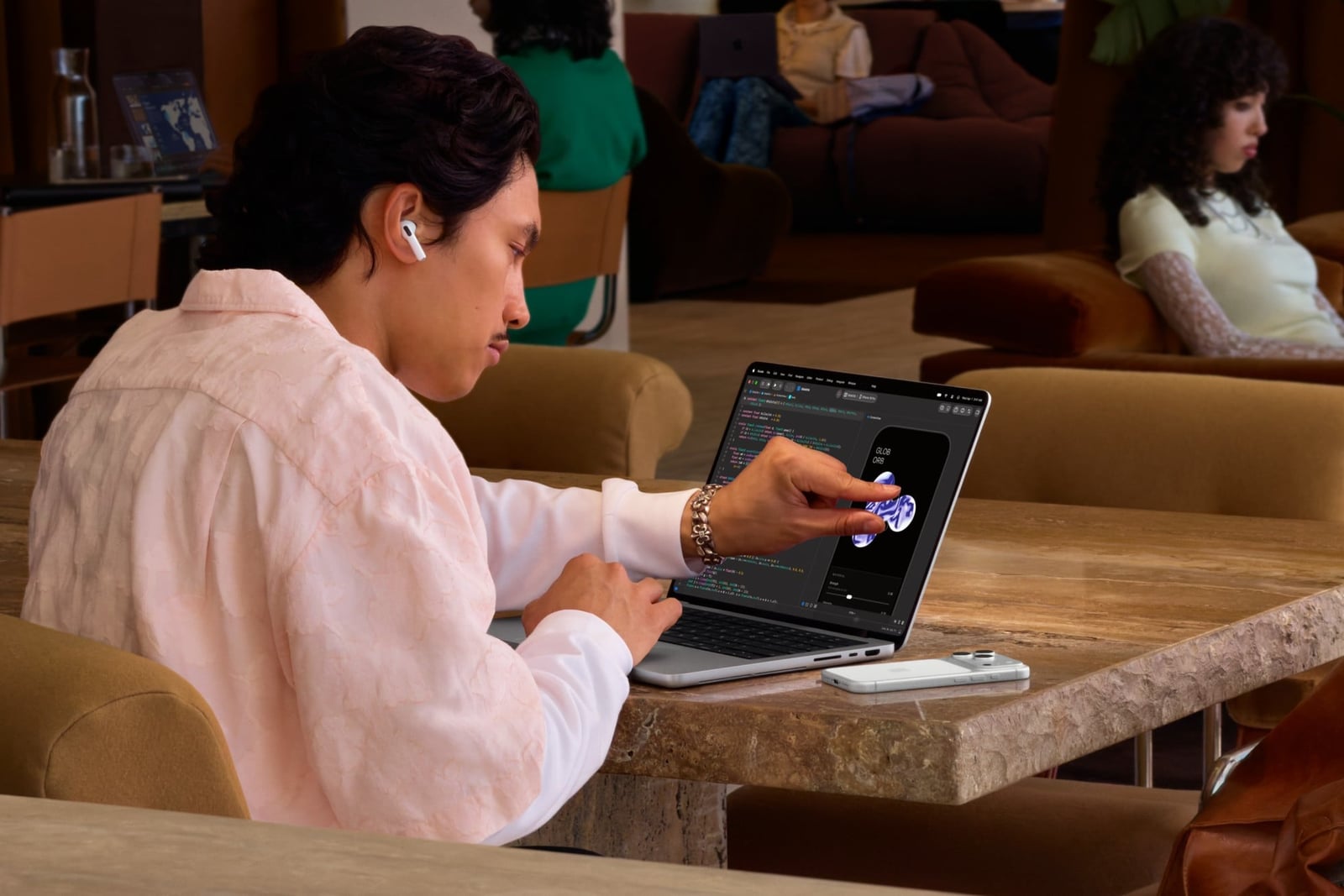
The touch sensor sits inside the display panel itself, which Apple says reduces latency. The hinge has been redesigned so the screen stays steady when you prod it. Apple has kept the keyboard and trackpad at the centre, so touch is an extra way to work and not a replacement.
The software list is already useful. In Pixelmator Pro you can draw and make selections straight on the glass. Final Cut Pro supports touch adjustments on the timeline. Logic Pro turns the screen into an onscreen keyboard for playing instruments. Lightroom, DaVinci Resolve, Blender and Cinema 4D are expected to add touch support, though that is still a promise.

What nobody can say yet is how it feels at hour six of an edit. Reaching up to a vertical screen is a different motion from using a tablet, and precision work may still belong to the trackpad. Apple’s spec sheet can’t settle that. Independent testing will.
Power for heavy files
The M5 Pro and M5 Max are aimed at 8K video editing, 3D rendering, animation and AI work. The Max is the choice for the most punishing production schedules. Configurations go up to 128GB of unified memory and 16TB of storage, enough for a feature-length project or a dense architectural model. A third-generation ray-tracing engine handles lighting calculations in 3D software, and dedicated Neural Accelerators speed up AI tasks.
Apple also stresses that some demanding AI models can run on the laptop itself. For a studio that spends heavily on outside computing, that could trim the bill.
The body has lost weight too. The 14-inch model weighs about three pounds and the 16-inch about four, and both are thinner than the models they replace. The port selection is still a pro’s: three Thunderbolt 5 ports, HDMI, an SDXC card reader, MagSafe charging and a headphone jack. Apple quotes up to 24 hours of battery life under its own test conditions. Fast charging brings the battery to 50 percent in roughly 30 minutes. A six-speaker system promises deeper bass and clearer sound.
The price, and the verdict
The 14-inch M5 Pro starts at $2,899, and the 16-inch at $3,399. With the M5 Max, the 14-inch starts at $4,499 and the 16-inch at $4,799. Pre-orders opened on October 28, 2026, and the laptops reach general availability on November 6.
Whether to buy depends on your current machine. If you grade HDR, prepare images for print or work in 3D every day, the display and the extra processing power address real needs. A card reader and HDMI port that stay put on a lighter machine are a quiet bonus.
If your current laptop already handles your workload without complaint, the case is weaker. A touchscreen is a clever new tool, but it won’t make a designer better. Battery life, sustained rendering speed and touch ergonomics all still need independent testing, and those results will matter more than the launch figures.
Think of it the way you would a fine mechanical watch. The engineering is real, the finish is high, and the price rewards people who will use what it does. Everyone else is paying for the pleasure of owning it. Both are legitimate reasons to buy, as long as you know which one is yours.
Via DSCENE