Front Row
Vincent Cassel Spends 3.5 Hours in Makeup to Rewrite Quasimodo
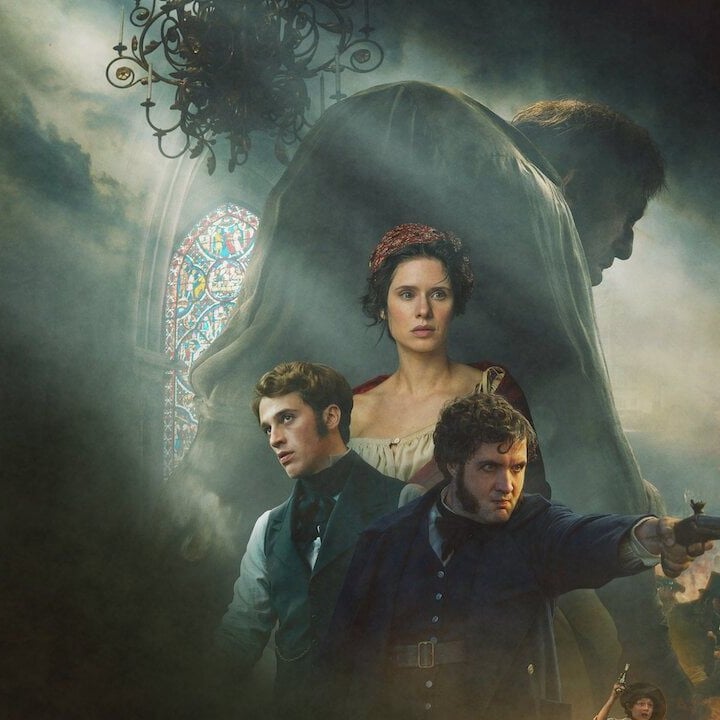
Netflix's Quasimodo, the Soul of Paris moves Hugo's hunchback to 1830, with forty silicone masks, 9,000 skeletons and a cathedral emptied of its furniture.
Every shooting day, Vincent Cassel put on a new face, and every evening it was thrown away. That is the logic behind his Quasimodo in Quasimodo, the Soul of Paris, the Jean-François Richet film landing on Netflix on Friday, November 27, 2026. The silicone mask is single-use, painted to pass for skin, and the makeup chair takes three and a half hours of the actor’s morning.
The craft behind it is the kind a luxury audience will appreciate. The Atelier 69 team made about forty custom masks, one per shooting day, and every hair of the beard and eyebrows was punched in by hand. Padding sits under a linen smock. The result, according to Netflix, is a Quasimodo defined by restraint, which is a notable choice for a character usually played at full volume.

Not the Middle Ages, not quite Hugo
The film does not retell the novel. It starts from a historical hunch, so to speak: that a hunchbacked stonemason worked alone at Notre-Dame in the 1820s. The idea comes from the memoirs of the English sculptor Henry Sibson, who mentions such a man on the cathedral’s restoration site. The hypothesis is that Victor Hugo may have crossed his path while researching. The screenplay also draws on Tate Britain archives to imagine the meeting between the 28-year-old novelist and this “man of the people”.
So the setting moves from Hugo’s Middle Ages to Paris in 1830, under Charles X, on the eve of the July Revolution and with cholera threatening the capital. Cassel’s sculptor is mistaken for a monster and hunted by the police, yet he may hold the key to a medical cure. He is also in love with Agnès, a dancer, and he turns the ruined cathedral into a refuge for them both. Placed there, the story sits between The Hunchback of Notre-Dame and Les Misérables, the two Hugo worlds the screenplay sets out to join.
A cast dressed for the argument
Costume does a lot of the storytelling. Daphné Patakia plays Agnès, who discovers herself through Quasimodo’s gaze and, carried along by history, becomes an allegory of Liberty. She wears pale yellow, a nod to Delacroix’s famous painting. Karim Leklou is Coco-Lacour, head of the security brigade, in a green that recalls the arsenic dye of the period. Benjamin Voisin plays Gaspard Tournier de Vaillac, an experimental doctor in a dark silhouette, surrounded by his students. Noémie Lvovsky rounds out the principal cast.
Behind the cast is Olivier Bériot’s costume department, which made 117 costumes and rented 800 more. The carnival sequence alone required dressing 300 people. Those are the numbers of a production that wanted the crowd to look as considered as the leads.
A cathedral emptied, a city rebuilt
The film shows Notre-Dame as it stood in 1830: abandoned and under threat of dismantling. For the interiors, the production used Bourges Cathedral, which was completely cleared of its furniture. The Sorbonne stood in for the Hôtel-Dieu medical faculty. Military grounds south of Paris, helped by digital effects, became period streets.
Production designer Philippe Chiffre and his team rebuilt the alleyways of Les Halles and La Grande Roquette. They worked with the cobbled streets of Senlis and Compiègne and with purpose-built sets. The art department alone drew on a hundred technicians. The whole film was shot in France.
Below ground, the figures get a little macabre. To recreate the catacombs of 1830, the team manufactured 9,000 skeletons and 8,000 skulls. It is an unusual line item, and a good sign of the care that went into the film’s texture.
For Cassel, the part adds another transformation to a career that has not been short of them. For Netflix, it is a French-made historical drama that treats a famous monument as a character. And for viewers, it offers the chance to see an old myth in the light of a real, turbulent year in Paris, with a lead who plays the hunchback quietly and lets the makeup, the stone and the costumes carry the rest.
Via Netflix