
By Hannah
Velvet vs. Wool Tuxedos: When Does Each Fabric Work Best?
Fabric choice can make or break a tuxedo. Two men can wear the same silhouette to the same event and look completely different based on what the jacket is made from. The velvet vs. wool tuxedos debate isn’t about one fabric being superior; it’s about understanding what each one does well and matching that to your occasion, the season, and the formality level you need to hit. Wool is the longtime standard of black-tie dressing, and velvet is the alternative that photographers tend to remember. Knowing which one belongs on your body, at your event, in your city’s December cold or August humidity, takes more than a quick glance at a swatch. This guide breaks down how both fabrics behave, where each one earns its place, and what you should factor in before the alterations specialist takes a single measurement.
How Velvet and Wool Tuxedos Differ in Look and Feel
The gap between velvet and wool goes deeper than surface texture. When men research custom tuxedos for formal events in NYC, fabric choice is consistently one of the first decisions a master tailor raises, and for good reason. Both materials drape differently, interact with light differently, and send different signals to everyone in the room. Velvet catches light at the pile, creating a visual depth that shifts as you move. Wool absorbs light rather than reflecting it, which produces a quieter, more uniform appearance that reads as classic and controlled. The weight difference matters too. Velvet tends to run heavier, which gives the jacket a structured, slightly theatrical presence. Wool in a fine Super 120s or Super 150s weave sits closer to the body, moves naturally with your frame, and breathes in a way that velvet simply cannot match. Understanding these differences is where the decision actually starts.
What Makes Velvet a Statement Fabric
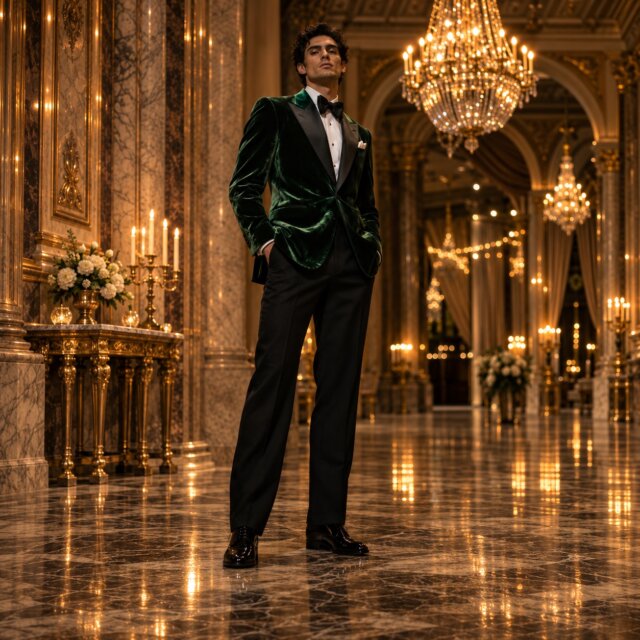
Velvet’s whole identity comes down to its cut pile – thousands of tiny upright fibers that catch and redirect light depending on your angle. Tailors call this “sheen direction,” and it means the jacket reads slightly darker from one side and richer from another. In low, warm lighting – a winter gala, a candlelit dinner, a New Year’s Eve party, that quality is genuinely spectacular. The fabric signals intentional luxury rather than default formality. Midnight blue, forest green, burgundy, and black are the traditional velvet tuxedo colors, and each one deepens considerably under dim light. Velvet’s weight also works in its favor through fall and winter; it holds its shape without heavy internal construction, and the warmth it offers is real, not incidental. The catch? Velvet is unforgiving in heat or humidity. It can flatten, marks easily under pressure, and needs more careful storage than wool. So while the visual payoff is high, the maintenance commitment is equally serious.
Why Wool Remains the Standard
Wool has anchored black-tie dress codes for over a century because it performs across a wider range of conditions than any other suiting fabric. A well-chosen wool tuxedo – particularly one cut from a fine worsted or barathea weave – holds a sharp crease, handles body heat without looking wilted, and presents a clean, refined surface that reads as appropriate at virtually every formal event on the calendar. Barathea wool carries a subtle textured weave giving it more visual interest than a flat twill while still meeting traditional black-tie standards. Tropical wools, lighter and more breathable, make wool viable even in warmer months. Wool also accepts alterations more predictably than velvet; a skilled tailor can address asymmetries, adjust shoulder pitch, and set a precise lapel roll in ways that velvet’s pile can complicate. For most men dressing formally year-round, wool is the safer and more flexible foundation.
Choosing the Right Tuxedo Fabric for Your Event
Occasion and environment should determine the decision between velvet and wool more than personal preference alone. A fabric that looks extraordinary in one setting can look out of place in another, and the formality of the event sets firm expectations that the wrong textile will undermine regardless of how well the jacket fits.
When Velvet Earns Its Place
Velvet belongs at events where warmth, low lighting, and a degree of personal expression are either expected or welcome. Winter weddings in historic ballrooms or intimate venues are the clearest fit. Holiday galas, charity events in November and December, and New Year’s Eve celebrations are natural homes for the fabric because the ambient lighting and seasonal mood align with what velvet does visually. If you’re a groomsman at a fall or winter wedding where the couple has opted for rich, deep color palettes, a velvet tuxedo in midnight blue or forest green ties directly into that aesthetic in a way wool can’t replicate. Black-tie optional events also give velvet more room, since the dress code itself invites considered personal choice. One practical note: velvet works best as a jacket paired with fine wool trousers in a matching or complementary tone. Full velvet suits are rarer and harder to calibrate to a room’s formality level.
When Wool Is the Better Choice
Wool is the right call for any event with strict black-tie requirements, any warm-weather venue, and any occasion where you want the fabric to disappear behind the tailoring. A state dinner, a formal awards ceremony, a spring or summer wedding, or any event that spells out black-tie on the invitation, these are settings where wool is expected and velvet risks reading as underdressed or theatrical in the wrong way. Beyond dress code compliance, wool gives you versatility that velvet doesn’t. A well-built wool tuxedo jacket can cross seasons with a change of accessories, works in daylight as readily as it does under chandeliers, and doesn’t demand the specialized storage and brushing routine that velvet requires. If you’re making a single investment in a tuxedo you’ll wear across multiple events over several years, wool is the fabric that holds its value through repeated wear. Fit will always carry the look more than fabric does; but wool gives a skilled tailor the most predictable material to work with.
Conclusion
The velvet vs. wool tuxedos question doesn’t have one right answer; it has the right answer for your occasion. Velvet rewards low light, cold months, and events with room for personality. Wool earns its place anywhere formality runs strict, the weather runs warm, or you need a tuxedo that works across multiple settings over time. Both fabrics reward proper tailoring. A velvet jacket cut to your exact measurements will outperform a wool jacket bought off the rack every single time, and the same is true in reverse. Before you choose the fabric, know your event, know your season, and work with a tailor who can take your actual measurements rather than fitting you to a pre-cut block. The fabric matters, but fit is the decision you’ll feel every minute you’re wearing it.


